Patent Lawyer Patent Attorney Patent Lawyer
Patent Lawyer Trademark computer
Patent Lawyer Service Mark Patent
image

image image image image image image image image

image
image image image

Gallagher & Dawsey Co., LPA is a unique intellectual property law firm whose practice includes intellectual property counseling and services to businesses and individual inventors, as well as other law firms, regarding patent, trademark, copyright, and trade secret issues.

Our experienced patent attorneys and trademark attorneys provide various intellectual property legal services such as patent searches, patent applications, trademark searches, trademark applications, copyright applications, infringement advice/opinions, and infringement litigation.

Complete our Request Form to receive one of our Free Brochures regarding protecting your intellectual property, or simply relax and receive an intellectual property education by watching the videos in our Online I.P. Video Library.

In today's information based society, the value of patents, trademarks, and copyrights has never been higher. Contact one of our patent lawyers or trademark lawyers to learn more about protecting your inventions, brands, and creative works.

The U.S. patent and trademark attorneys of Gallagher & Dawsey Co. LPA serve clients around the world from our Midwest offices. Our patent and trademark law firm has offices in Columbus, Dayton, and Cincinnati, Ohio.


image

imageSupreme Court Rules that Foreign Works can be Re-Copyrighted. In Golan v. Holder, the U.S. Supreme Court ruled that Congress did not exceed it’s authority by enacting legislation that removed lapsed foreign works from the public domain. Normally, when a work lapses into the public domain anyone is free to use the work without having to pay for the use. In 1994, in order to bring the United States in line with the Berne Convention, the U.S. Congress passed legislation that re-copyrighted foreign works whose copyright had lapsed in the United States but remained protected abroad. Prior to the passage of the legislation, millions of foreign works had lapsed into the public domain. The plaintiff in Golan claimed that the removal of works from the public domain infringed upon the rights of free speech. Justice Ruth Bader Ginsburg gave the opinion of the Court, stating "[n]either congressional practice nor our decisions treat the public domain, in any and all cases, as untouchable by copyright legislation. The First Amendment likewise provides no exceptional solicitude for works in the public domain." The Court declared that the harm caused by removing foreign works from the public domain was less important than the act of re-copyrighting foreign works to align U.S. copyright law with the Berne Convention.

image Fifth Circuit Appeals Court Affirms Sanctions against Plaintiff’s Attorney. The plaintiff, in Mick Haig Productions v. Does 1-670, probably thought that they had an unbeatable scheme for making money. The plaintiff sued 670 anonymous internet users for illegally downloading pornography. Unfortunate for the plaintiff, only the IP-addresses for the users were known. As a result, the plaintiff would use the court system to compel the discovery of the individual’s identities after which, the plaintiff, having no desire to actually litigate, would shame the accused downloaders into settling the case instead of risking public embarrassment. The lower court sanctioned the plaintiff’s attorney for violating Federal Rules of Civil Procedure 26 and 45 by issuing subpoenas to at least two Internet Service Providers even though the plaintiff’s motion to expedite discovery was still pending. The plaintiff’s attorney appealed the sanctions only to have the Court of Appeals for the Fifth Circuit affirm the sanctions.

image A Victory for Open Source Programming. In Oracle v. Google, Oracle was claiming that they owned the copyright to the Java Application Programming Interface (API) used by Google used in conjunction with the popular Android operating system. An API is a directory that allows various parts of a programming language to interface one another. Google chose to clone the Java API instead of using Oracle’s API. Oracle claimed that because Google’s API performed the same functionality as Oracle’s API, Google was guilty of copyright infringement. If Oracle’s claims prevailed it would have sent shockwaves through the open source community since such claims would not only be applicable to Java but all open source programming languages and programs derived from them. Fortunately for the open source community and Google, the Court ruled that computer language API’s could not be copyrighted. Judge Alsup stated, "to accept Oracle's claim would be to allow anyone to copyright one version of code to carry out a system of commands and thereby bar all others from writing their own different versions to carry out all or part of the same commands."

image Supreme Court Narrows Patentable Material Based On Laws of Nature: On March 20, 2012, the Supreme Court unanimously reversed the Court of Appeals for the Federal Circuit holding that Prometheus Laboratories’ patents were directed to non-statutory subject matter pursuant to 35 U.S.C. § 101 and therefore not patent-eligible. The Court held: "If a law of nature is not patentable then neither is a process reciting a law of nature, unless that process has additional features that provide practical assurance that the process is more than a drafting effort designed to monopolize the law of nature itself." A claim in the Prometheus patent applied a law of nature to quantify the relationships between the blood concentration of thiopurine metabolites and a drug’s effectiveness and harmful side effects. The Court found that the relationship between the presence of metabolites and the likelihood that the drug dosage will be effective or induce harmful side-effects actually "sets forth a natural law." As a result, the Court held that the claimed diagnostic method failed to transform an unpatentable law of nature into a patentable application of the law. Thus, whether the invention at issue is a method of medical treatment or a software-based business method the only sure path to patent-eligibility is to incorporate one or more elements, or steps, that are novel and nonobvious.

image Eolas Technologies’ Interactive Internet Claims Don’t Hold Water. In Eolas Technologies Inc. v. Adobe Systems Inc., Eolas was seeking approximately $600 million dollars for infringing the Eolas patents. Some of the companies included in the lawsuit as defendants were Adobe Systems, Amazon, CDW Corp., Google, JC Penney, Staples Inc., Yahoo, and YouTube. Eolas asserted that their patents (USPN 5,838,906 and USPN 7,599,985) covered the interactive aspects of online video, streaming music, image manipulation, and various search features. Unfortunately for Eolas, expert witness Tim Berners-Lee, who is credited for inventing the World Wide Web, presented prior art that predated the Eolas patent applications resulting in a jury finding the patents invalid.

image Supreme Court Rules that Foreign Works can be Re-Copyrighted. In Golan v. Holder, the U.S. Supreme Court ruled that Congress did not exceed it’s authority by enacting legislation that removed lapsed foreign works from the public domain. Normally, when a work lapses into the public domain anyone is free to use the work without having to pay for the use. In 1994, in order to bring the United States in line with the Berne Convention, the U.S. Congress passed legislation that re-copyrighted foreign works whose copyright had lapsed in the United States but remained protected abroad. Prior to the passage of the legislation, millions of foreign works had lapsed into the public domain. The plaintiff in Golan claimed that the removal of works from the public domain infringed upon the rights of free speech. Justice Ruth Bader Ginsburg gave the opinion of the Court, stating "[n]either congressional practice nor our decisions treat the public domain, in any and all cases, as untouchable by copyright legislation. The First Amendment likewise provides no exceptional solicitude for works in the public domain." The Court declared that the harm caused by removing foreign works from the public domain was less important than the act of re-copyrighting foreign works to align U.S. copyright law with the Berne Convention.

image American Invents Act Changes False Patent Marking Rules. The recently passed American Invents Act (AIA) has implemented many changes to the practice of patent law. One of these changes affects the enforcement and penalties associated with producing a product labeled with an expired, invalid or inapplicable patent. Prior to the passage of the AIA, a party that discovered an article marked with an expired, invalid or inapplicable patent could bring suit against the responsible marker and split the statutory penalty with the government. Under the old law, false marking was subject to a penalty of $500 “for every such offense.” Under the newly passed AIA, individuals can no longer bring suit against a company for falsely marking a product unless they suffered direct competitive injury as a result of the false marking. Further, a company that has suffered a direct competitive injury can only recover “actual damages,” which are generally difficult to prove. Additionally, prior to the AIA passage, marking a product with an expired patent number was a violation of patent law subject to a penalty. Now, the law no longer penalizes a manufacturer for failing to remove expired patent numbers from their products. Therefore, the new law has effectively eliminated the era of false marking vigilantes.

image Much More Already in Effect, with More to Come, in the America Invents Act. The AIA has changed, or will change, many long established laws and procedures in patent prosecution. Some of these include:

  • Effective now, a Small Entity can pay $2,400 ($4,800 for large entities) for expedited examination; with a patent office goal of wire to wire prosecution within 12 months. In the larger picture of the costs of patenting, this may represent a good value for many applicants.

  • Effective September 2012, for the first time, third parties will have an effective way to bring prior art to the attention of Examiners; potentially giving these third parties the means to block competitors’ applications.

  • Effective March, 2013, there will be a wide broadening of the definition of “prior art,” that will make more foreign sources count as patent-disqualifying prior art.

  • Also effective March, 2013, the United States will switch from being a “first to invent” to a “first to file” county, to conform to general world practice. This will greatly change the rules on who is entitled to a patent, and may greatly change traditional practices regarding Provisional Patent Applications and early filing.
Of course, the AIA is much more complex than can be expressed here. Please check with us anytime, and over the course of the next eighteen months, as we see how these changes will affect inventors everywhere.

image Stop Online Piracy Act (SOPA) and the War Between the Technology and Entertainment Industries. On October 28, 1998, the Digital Millennium Copyright Act (DMCA) was added to title 17 of the U.S. Code governing copyright. The purpose of the DMCA was to modify copyright law to cover loop holes in the law caused by the advancement of technology, such as the internet. Under the DMCA, internet service providers are provided a safe haven against liability for copyright infringement by their users, but must comply with a take down notice from a copyright holder.

Unfortunately for the entertainment industry, policing the internet for infringing material is costly and time consuming. As such, the entertainment industry has been lobbying Congress to pass the Stop Online Piracy Act (SOPA), which would allow an online service provider’s entire domain of to be seized and shut down for infringing material uploaded by a user. Thereby, shifting the responsibility of policing for copyrighted works to the internet service provider.

In contrast, the technology industry is lobbying against the passage of SOPA. The enactment of SOPA would impose drastic changes on online service providers, and will cause some to shut down. For instance, as SOPA is currently written, the YouTube domain could be seized and shut down if a user posts an unauthorized work. Furthermore, leaders in the technology industry claim that SOPA has the potential of drastically changing the internet as we know it, which will affect search engines, websites, forums, and blogs.

image Copyright Holding Company Righthaven LLC Ordered to Pay $120,000 in Attorney Fees and Court Costs. According the U.S. District Court of Nevada in Righthaven v. Thomas DiBiase, copyright holding company Righthaven LLC tried to shake down and force Thomas DiBiase into a settlement. Thomas DiBiase was running a website that aided in missing body murder cases, and used information found in a story in the Las Vegas Review-Journal. Righthaven claimed ownership of the copyrighted material and threatened to sue DiBiase. Unfortunately for Righthaven, DiBiase decided to not to settle and put up a fight. At trial, DiBiase claimed that the use of the material from the Las Vegas Review-Journal fell under the fair use exemption because the website was non-profit in nature and aided law enforcement. Interesting enough, the judge did not rule on the fair use claims but rather dismissed the case for lack of subject matter jurisdiction. It turns out that Righthaven never owned the copyrights that they claimed ownership in, and did not have a right to seize DiBiase’s website. Furthermore, the judge ruled that Righthaven violated Civil Procedure Rule 11(b) by filing a frivolous lawsuit without merit. As a result, Righthaven was ordered to pay all fees requested by DiBiase, a sum total of approximately $120,000.

image “Exceptional” Case Finding Requires Patent Holding Company Plaintiff to Reimburse Defense Costs: In Eon-Net LP v. Flagstar Bancorp (Fed. Cir. 2011), Eon-Net, a patent holding company, sued Flagstar, claiming that Flagstar violated Eon-Net’s patent. Flagstar’s website gave customers the option of applying for a loan online, while Eon-Net’s patent claimed an "information processing system for inputting information from a document or file on a computer into at least one application program . . .," and specified the limitation "hard copy" over a hundred times. Because Flagstar’s paper-free website was clearly outside of the boundaries of Eon-Net’s patent claims, the court issued a summary judgment for defendant and awarded costs and misconduct sanctions against Eon-Net’s counsel and his law firm. The court found that the lawsuit was sufficiently "exceptional" under 35 U.S.C. § 285 to reject the usual rule that each side pays its own legal expenses, and to justify reimbursement for the defendants for their unwarranted expenses. The court, subsequently upheld on appeal, ordered Eon-Net to pay Flagstar $631,134 in defense expenses and misconduct sanctions against Eon-Net’s lawyers. The Court, faulting Eon-Net’s lack of pre-suit investigation and failure to specify any plausible infringement, reminds patent holders of the need for a careful analysis of allegedly infringing products and the necessity of pleading at least a basically well-documented case of infringement.


image


imageThis month our Ohio patent litigation attorneys tip their hats to the inventors of some interesting head wear. In 1916, A.B. Pratt was granted the patent for his invention simply titled "weapon", which covers a firearm that is built into a helmet. In contrast, the invention titled "Combination Pillow and Crash Helmet" seems a little more relaxing to wear. Lastly, a patent from 1923 for "Novelty Headwear" appears to be an early version of the iconic paper hat worn by fast food workers across the country.

imageOur patent prosecution attorneys have updated the "Historic Patents" section of our website to include some interesting U.S. patents for early office supplies. Imagine the chaos within your office without the humble push pin! This early push pin patent issued in 1914 direct to an angled push pin. Our patent lawyers have also added this patent from 1932 simply titled "Calculating Machine;" as well as a "pencil and eraser" patent from 1858!

imageMarch is Women's History Month in the U.S., so this month, weve updated the "Historic Patents" section of our website to honor some of the innovative ladies who've been issued U.S. patents. In 1903, Mary Anderson developed a solution to the new problem of driving a car in the rain. Her "Window Cleaning Device" was an early windshield wiper. Patsy Sherman developed "Block and Graft Copolymers Containing Water-Solvatable Polar Groups and Fluoroaliphatic Groups" while attempting to develop a new kind of rubber for jet aircraft fuel lines. Her invention later became known as Scotchgard. In addition to being an author and speaker on the topic of autism, Dr. Temple Grandin is also an authority on livestock behavior and humane slaughter techniques. Her invention, "Animal Stunning System Prior to Slaughter," is just one of the many contributions she has made to the development of more humane livestock handling facilities.

imageThis month the IP lawyers at Gallagher & Dawsey have added new, pet related content to the “Patents for Your Pets” section of our "Interesting Patents" page. First, we have the "Bird Trap and Cat Feeder" patent. This invention was meant to kill two birds with one stone: reduce the sparrow population, and keep the neighborhood cats well fed. Next, we have the "Apparatus for Determining Dog's Emotions by Vocal Analysis of Barking Sounds and Method for the Same" patent. This invention claims to determine the emotions of a dog by analyzing barking sounds. In the event this invention doesn't let you know when your dog is feeling frustrated, we have the "Flush Toilet for a Dog" patent. Now your dog can take over your bathroom as well as your couch.

imageThis month, the patent attorneys at Gallagher and Dawsey Co. LPA have jumped on the celebrity inventor bandwagon and have added new celebrity patents to the Interesting Patents section of the website. You won't need Radar to catch fish with this "Enhanced Fish Attractor Device" patent granted to a cast member of the M.A.S.H. television show. Chapped lips? This "winning" invention titled "Chapstick Dispensing Apparatus" by Carlos Irwin Estevez, a.k.a. Charlie Sheen, may be just what you need. Lastly, it's no myth that myth-buster Jamie Hyneman was granted a patent in 2002 for his invention titled "Remote Control Device With Gyroscopic Stabilization and Directional Control.

imageIn the spirit of Thanksgiving, we are highlighting a couple of trademarks this month. What would Thanksgiving morning be without "Macy's Thanksgiving Day Parade"? That phrase became a registered mark in 1998 after being in use since 1924. To continue with our Thanksgiving theme, the patent lawyers at Gallagher & Dawsey have added new content to the Interesting Patents page, which includes a "Poultry Frying Apparatus" and a "Turkey Decoy." For those of you who enjoy hunting and cooking your own turkey, this "Poultry Frying Apparatus," or this "Turkey Decoy" may come in handy!

image It's almost Halloween again, so to celebrate our Ohio patent attorneys have added Halloween themed patents to the Historic Patents section of the website. This patent for a "Jack-A-Lantern", issued in 1889, is not carved from a pumpkin, but is just as creepy! If you do prefer your Halloween décor to be made from pumpkins, check out the patent for "Forming Configurations On Natural Growth." Finally, a 1914 design patent for a "Paper Sheet or Similar Article" might appeal to those who find other Halloween décor too scary.

image Here in Ohio another summer is coming to a close and the daylight hours are getting shorter. As a farewell to the long summer days, the IP lawyers at Gallagher & Dawsey have added patents for solar powered inventions to the Interesting Patents section of our website. Outdoorsmen and women may be interested in a patent covering a "Container for Purifying Water by Utilization of Sunlight," perhaps a "Solar Powered Bird Feeder," or a "Solar Powered Mouse."

image This month the patent attorneys at Gallagher & Dawsey have added new content to the Weird and Wacky Patents section of the website. Our efforts to uncover crazy patents have revealed a patent from the 1930's covering a "Cigarette Ring." This piece of jewelry may have been a popular fashion accessory in 1936 before the link to cancer was fully appreciated but would probably require a Surgeon General's warning today. We have also added a classic "bro" patent covering an "Apparatus for Simulating a High Five." Last but not least is a patent directed to "Edible Accessories for Conventional Toys," which is perfect for all the little girls that have worked up such an appetite playing with their dolls that the little plastic shoes start to look delicious.

imageOn July 17th intellectual property attorney David J. Dawsey had the pleasure of being a guest on the nationally syndicated The Small Business Advocate® radio program with Jim Blasingame to discuss how copyrights and patents may be used by small businesses. Click here to listen.

imageIn June the patent lawyers at Gallagher & Dawsey have added new content to the Historic Patents section of our website highlighting early flying machines. The additions include R.J. Spalding's 1889 patent for a "flying machine," a 1920 patent for a "flying boat hull,” and a 1969 patent for a "helicopter device." There is no doubt that the aviation industry recognizes the value of intellectual property!

image This month we've added content that proves patents can be very fashionable. For example, the classic pocket protector has been making fashion statements for over 100 years and was patented in 1903. For a more modern take on fashionable patents, take a look at the "Smart Garment" patent. And finally, for those of you who set your own trends, the garment covered in a patent titled "Pants Separable at the Crotch for Style Mixing" may be the perfect addition to your wardrobe.

imageDavid Dawsey has been reappointed by the American Bar Association (ABA) to serve a second two-year term on the editorial board of Landslide® magazine, the flagship publication of the Intellectual Property Law Section of the ABA. Landslide® magazine is a bi-monthly publication that offers news and analysis on patents, trademarks, copyrights and related topics, written by and for an audience of intellectual property lawyers. The magazine covers this rapidly evolving legal specialization through an emphasis that includes business, technology, the arts, legislation and international developments.

imageAs April comes and goes a lot of us have given up on our new year resolutions to eat healthier. So this month the patent attorneys at Gallagher and Dawsey have added new food themed content to the Interesting Patents section of the website. Some of these inventions just may help you curb your appetite and stick to that resolution after all. Check out USPN 7,037,541 to savor the thought of a nice cold alcoholic beverage derived from "meat extract, meat stock and/or bone extract.” If that does not suit your taste buds, how about some "tissue engineered meat for consumption," as disclosed in USPN 6,835,390. Finally we highlight the patented "beersicle" found in USPN 4,350,712.

image On February 2, 2012 patent attorney Michael Gallagher was present at the TechColumbus Innovation Awards ceremony and witnessed our client Celartia, and their Chief Scientific Officer Dr. Emilio Barbera-Guillem, win the "outstanding product" award for companies with less than 250 employees. Click here or here to view some of the patents covering their inventions. Congratulations Celartia!

imageThis month, the team of patent prosecution lawyers at Gallagher and Dawsey Co. LPA have added new content to the Interesting Patents section of the website. These inventions could have come out of a science fiction movie! The new content includes an early "Space Suit" patent that issued in 1968; a patent directed to "Space Living Quarters Having Artificial Gravity Environment;" and a patent for a "Space Vehicle Propelled By The Pressure Of Inflationary Vacuum State."

imageWe did it! Founded in 2002, Gallagher & Dawsey is pleased to celebrate 10 years of protecting, enforcing, and defending our clients' IP rights.

image This month the IP lawyers at Gallagher & Dawsey have added new, pet related content to the “Patents for Your Pets” section of our "Interesting Patents" page. First, we have the "Bird Trap and Cat Feeder" patent. This invention was meant to kill two birds with one stone: reduce the sparrow population, and keep the neighborhood cats well fed. Next, we have the "Apparatus for Determining Dog's Emotions by Vocal Analysis of Barking Sounds and Method for the Same" patent. This invention claims to determine the emotions of a dog by analyzing barking sounds. In the event this invention doesn't let you know when your dog is feeling frustrated, we have the "Flush Toilet for a Dog" patent. Now your dog can take over your bathroom as well as your couch.

image On December 30th patent lawyer David J. Dawsey had the pleasure of being a guest on the nationally syndicated The Small Business Advocate® radio program with Jim Blasingame to discuss The America Invents Act and the implications for small businesses. Click here to listen.

image The Columbus patent law firm of Gallagher and Dawsey has added new content to the Weird and Wacky Patents section of the Interesting Patents page. The theme this month is "there’s a patent for that?!" First, we've added the patent issued to a young inventor named Steven Olson for a "Method of Swinging on a Swing." Next is a "Sock and Shoe" patent that prevents annoying sock movement. Finally, we’ve added the 1977 patent directed to a "Method for Concealing Partial Baldness.” Yes, the comb-over was patented!

image Our Ohio copyright lawyers have added yet another new article to the IP Newsletter Archive of over 80 intellectual property articles. The new article, Public Performance of Copyrighted Material, explains.

imageGallagher & Dawsey Co. LPA is pleased to announce the launch of version 2.0 of our PatentMarvel website. In the past four years PatentMarvel has become a popular free online patent tool for U.S. patent lawyers and inventors to create free clean PDF copies of U.S. patents and published applications. Version 2.0 takes several steps forward and includes numerous tools developed by our intellectual property lawyers to ease the lives of US patent attorneys, inventors, and intellectual property owners. It includes a Patent Term Calculator, a Patent Claim Chart Generator, and a Patent Claim Tree Generator. Additionally, a unique toolbar appears at the top of the screen while a user is viewing a PDF that allows the user to quickly search the assignment records and view the maintenance payments via the bibliographic records link. We invite you to spend some time on the site and click on the various tools; you may be surprised by what you find. Enjoy.

imageThis month, the Ohio patent lawyers at Gallagher and Dawsey have added content to the Historic Patents page that may bring back some fond Christmas morning memories. First, we’ve added a patent issued to C.H Pajeau in 1940. "Toy Construction Blocks”, also known as Tinkertoys, are showing up under Christmas trees to this day. Next, we’ve added the 1966 patent for “Toy Boxers”, better known as Rock ‘em Sock ‘em Robots. Finally, we’ve added the 1971 patent directed to a “Toy Building Set”. These well known building blocks, which some may refer to as LEGO’s, are still popular with kids of all ages.

imageThis month the intellectual property attorneys at Gallagher and Dawsey Co. LPA have added new music related content to our Interesting Patents page. In our “Historic Patents” section, we’ve added a patent issued to G.D. Beauchamp in 1937. This Electrical Stringed Musical Instrument patent was one of the first patents issued for an electric guitar. We have also uncovered a patent directed to a musical pitchfork titled Stringed Musical Instrument. Finally, in the “Weird and Wacky Patents” section, we’ve added a 2007 patent covering an 11-string instrument referred to as the Tarpin, which would challenge even the most accomplished musician.

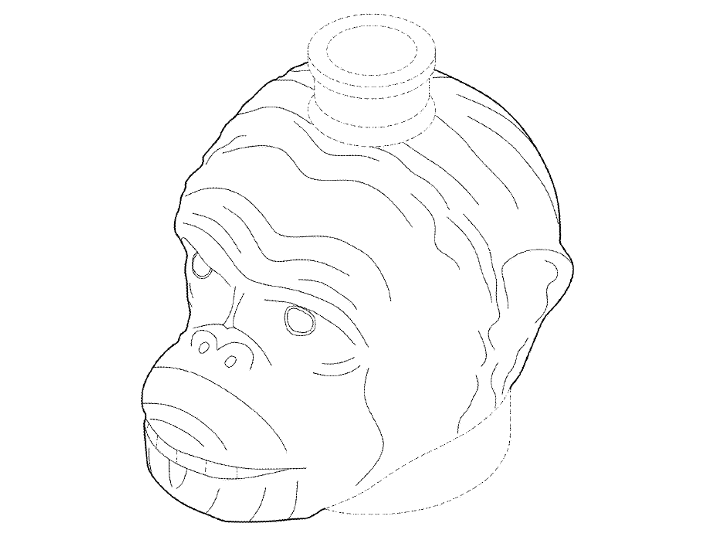
imageIt’s October and here in Ohio the ghouls and goblins will be trick-or-treating soon. This year, be the hero of your block when, instead of candy, you share your encyclopedic knowledge of interesting patents. To assist you with this endeavor, the Ohio patent lawyers at Gallagher and Dawsey have added creepy new content to their Interesting Patents page. First up, it’s a Broken Heart Shaped Coffin that recently issued to an Ohio inventor. Next, in our Historic Patents section, we have a 1921 patent for the Ouija Board. Last, but not least, in the Wacky Patents section, it’s the Life Expectancy Timepiece patent. "A timepiece for monitoring and displaying the approximate time left in a user’s life."

imageOn August 31st IP attorney David J. Dawsey had the pleasure of being a guest on the nationally syndicated The Small Business Advocate® radio program with Jim Blasingame to discuss signs that a small business may be loafing from an intellectual property strategy point of view. Click here to listen.

image Its fall and the cold weather months are right around the corner in Ohio. To give summer a great sendoff, our central Ohio patent attorneys have updated the interesting patent page with inventions that help you get outside and enjoy the last days of summer. First, in preparation for your Labor Day BBQ, check out our Historic Patents page where you will find the design patent for "lumps of Fuel", better known as charcoal briquettes. Additionally, to learn how to keep your BBQ free of snakes by using garlic visit our Weird and Wacky Patents page to read a patent titled "Snake Repellant System", which uses garlic to repel snakes. Lastly, check out a patent titled “Self Containing Enclosure for Protection from Killer Bees to learn how to protect your party from swarms of bees.

image Fall is right around the corner and classes will be back in session. To acknowledge this annual event, our IP law firm has added new, school related content to the Interesting Patents page of the website. First, in our "Ohio Inventors" section, we have added a patent covering a "System for Automated Translation of Speech". Next, in the "Weird and Wacky Patents" section, we have added a patent directed to a patent titled "Treadmill Foot-Control for Electronic Gauging of Classroom Satisfaction," an invention that all teachers would love! Finally, in the "Historic Patents" section we have added a patent directed to a 1950's era multiple choice test taking system titled the "Classroom Communicator".

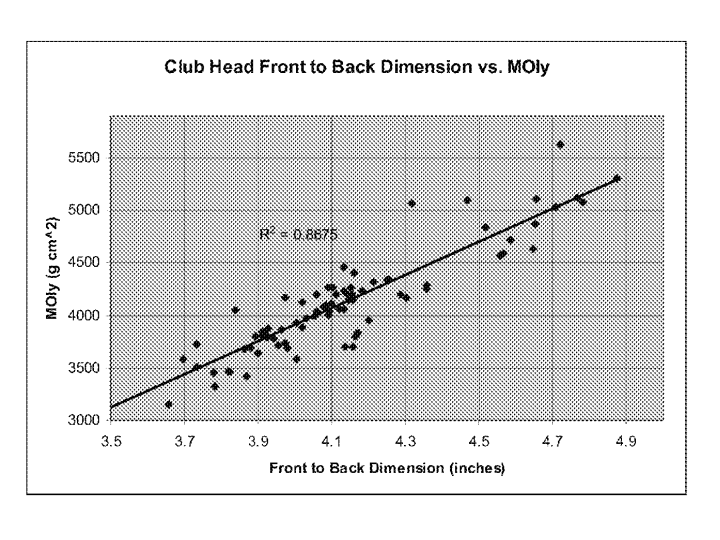
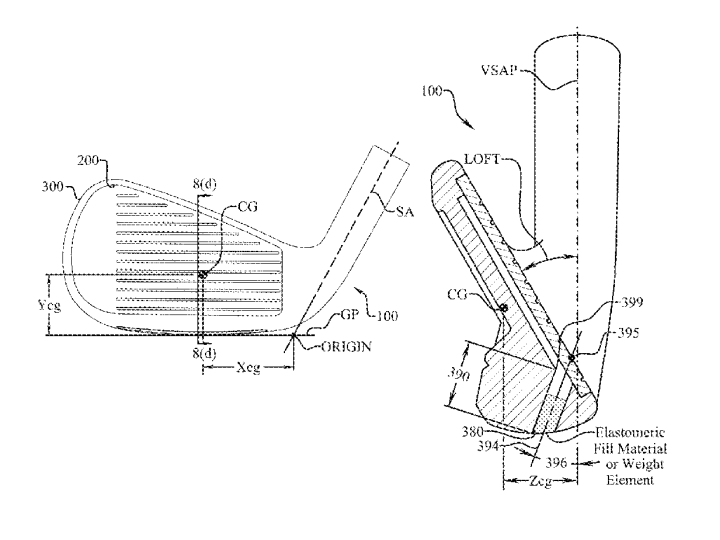
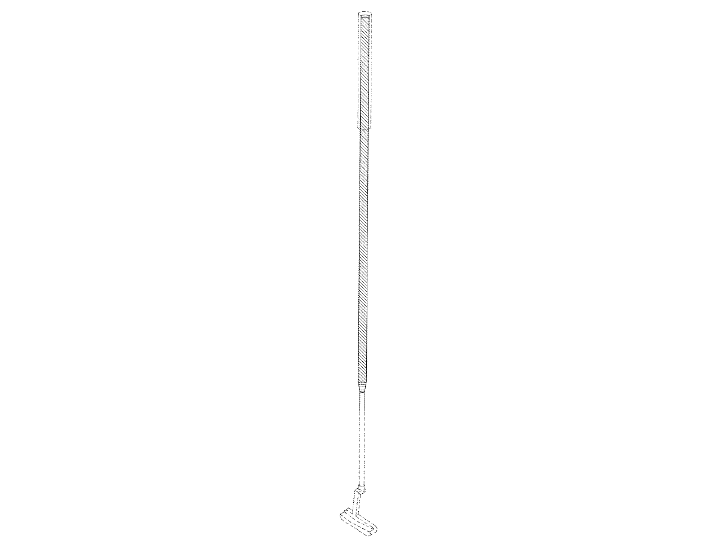
image Patent attorney David Dawsey was recently quoted in The Wall Street Journal's article "Golf's Perennial Question" regarding golf technology and patents.

image The IP law firm of Gallagher & Dawsey Co. LPA has added new extreme sports patent content to the Weird and Wacky Patents section of our Interesting Patents page. First, we have added a "Levitationarium For Air Flotation Of Humans" patent covering an invention patented in 1984 by Canadian inventor Jean St-Germain directed to a means of human air flotation. Second, we have added the famous "Body Connected Bike" patent. Granted to Justin W. Trenary in 2004, this invention allows the rider to experience biking from a new perspective.

imagePatent lawyer David J. Dawsey was recently interviewed (5/26/2011) on the nationally syndicated The Small Business Advocate® radio program with Jim Blasingame on the subject of "IP Considerations When Launching a New Product." Click here to listen.

imageThe Ohio intellectual property lawyers at Gallagher & Dawsey Co. LPA have added new content to our Weird and Wacky page to highlight the beginning of summer and inventive ways to keep cool. We all know that eating an ice cream cone can be a daunting task, having to keep turning the cone before your hand is covered in melting ice cream. In 1999, Rick Harrison was awarded his "Motorized Ice Cream Cone" patent, virtually eliminating this chore. Additionally, brothers Joshua and Noah Wien liked cooling off on a Slip 'N Slide®, but didn't like the bruises and cuts they got from the rough terrain under the toy. In 1996, the teenagers were awarded their "Aquatic Safety Slide and Wading Pool" patent, cushioning the ride of those sliding on their invention.


image

     
image

© 2012 Gallagher & Dawsey Co., L.P.A.
Patent Attorney | Patent Lawyer | Trademark Attorney | Trademark Lawyer | Invention Patent Attorney | Patent Prosecution Attorney | Patent Litigation Lawyer | Trademark Law Office | Patent Law Firm | Patent Strategy Attorney | Ohio Patent | US Intellectual Property Attorneys | Ohio Intellectual Property | Freedom To Operate Attorney | US Patent Agent | Patent Due Diligence Attorney

Home | Firm | People | Practice Areas | Our Work | Publications | Presentations | Inventor Resources | Legal Disclaimer | Sitemap

Maintenance by Nickey Media
Search Engine Placement